
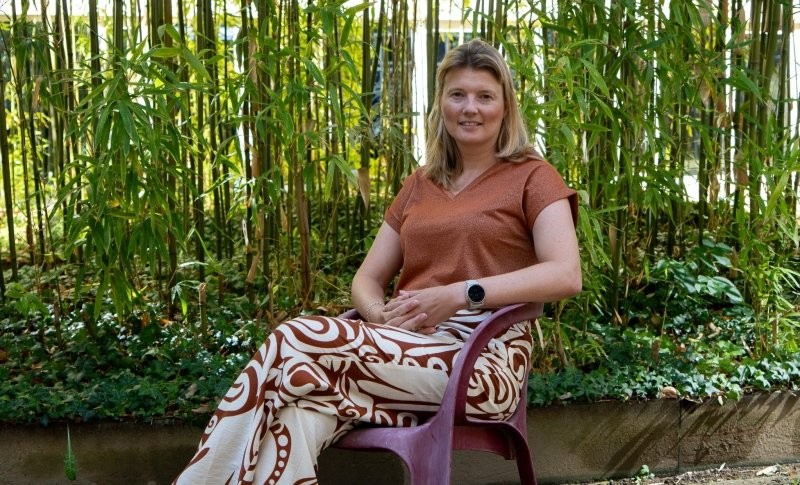
Rachel ter Bekke

Assistant Professor

Dr. R.M.A. ter Bekke is a cardiologist and electrophysiologist with a passion for precision medicine in cardiac arrhythmias. At Maastricht University Medical Center+ and the Cardiovascular Research Institute Maastricht (CARIM), she combines clinical care for patients with complex ventricular tachycardia (VT) with translational research on the genetic, electrical, and structural mechanisms underlying life-threatening arrhythmias.

She aims to translate insights from genetics, imaging, and electrophysiology into improved diagnosis and personalized treatment. Together with a multidisciplinary team, she established the VT-TRACT care pathway, which integrates genetic testing, advanced multimodality imaging (including photon-counting CT, 3D-MRI, and ECG imaging), and ablation procedures into a single continuum of care. Within this framework, she applies innovative therapies such as minimally invasive hybrid VT ablation, a unique collaboration between cardiology and cardiothoracic surgery, and stereotactic arrhythmia radiotherapy (STAR) for patients with therapy-resistant arrhythmias.

Her research focuses on understanding how genetic variation and myocardial scar formation promote arrhythmia and how artificial intelligence can improve risk prediction and treatment selection. Dr. ter Bekke serves as principal investigator within the STOPSTORM consortium, a European research initiative dedicated to developing safe and effective STAR therapy for VT.

She has received multiple awards for his work, including the CARIM Dissertation Award and an NWO Veni grant. She is an active contributor to educational programs of the European Heart Rhythm Association (EHRA).

Department of Cardiology
Address: P. Debyelaan 25, 6229 HX Maastricht
Room number: 3.B2.025
T: +31 (0)43 387 70 95

  • 2017
    • Klaeboe, L. G., Haland, T. F., Leren, I. S., ter Bekke, R. M. A., Brekke, P. H., Rosjo, H., Omland, T., Gullestad, L., Aakhus, S., Haugaa, K. H., & Edvardsen, T. (2017). Prognostic Value of Left Ventricular Deformation Parameters in Patients with Severe Aortic Stenosis: A Pilot Study of the Usefulness of Strain Echocardiography. Journal of the American Society of Echocardiography, 30(8), 727-735.e1. https://doi.org/10.1016/j.echo.2017.04.009
  • 2016
    • Wellens, H., Lindemans, F. W., Houben, R. P., Gorgels, A., Volders, P. G., ter Bekke, R. M. A., & Crijns, H. J. (2016). Improving survival after out-of-hospital cardiac arrest requires new tools. European Heart Journal, 37(19), 1499-1503. https://doi.org/10.1093/eurheartj/ehv485
  • 2015
    • Kumar, N., Abbas, M. M., ter Bekke, R. M. A., de Jong, C. M. M. J. F., Choudhury, R., Bisht, O., Philippens, S., & Timmermans, C. (2015). Maastricht experience with the second generation endoscopic laser balloon ablation system for the atrial fibrillation treatment. Netherlands Heart Journal, 23(7-8), 373-374. https://doi.org/10.1007/s12471-015-0703-8
    • ter Bekke, R. M. A., Haugaa, K. H., van den Wijngaard, A., Bos, J. M., Ackerman, M. J., Edvardsen, T., & Volders, P. G. A. (2015). Electromechanical window negativity in genotyped long-QT syndrome patients: relation to arrhythmia risk. European Heart Journal, 36(3), 179-186. https://doi.org/10.1093/eurheartj/ehu370
  • 2013
    • Zusterzeel, R., ter Bekke, R. M. A., Volders, P. G. A., Leijten, F. M. M., van den Wijngaard, A., Serroyen, J., & Gorgels, A. P. M. (2013). Right-Ventricular Enlargement in Arrhythmogenic Right-Ventricular Cardiomyopathy Is Associated with Decreased QRS Amplitudes and T-Wave Negativity. Annals of Noninvasive Electrocardiology, 18(6), 555-563. https://doi.org/10.1111/anec.12080
  • 2012