

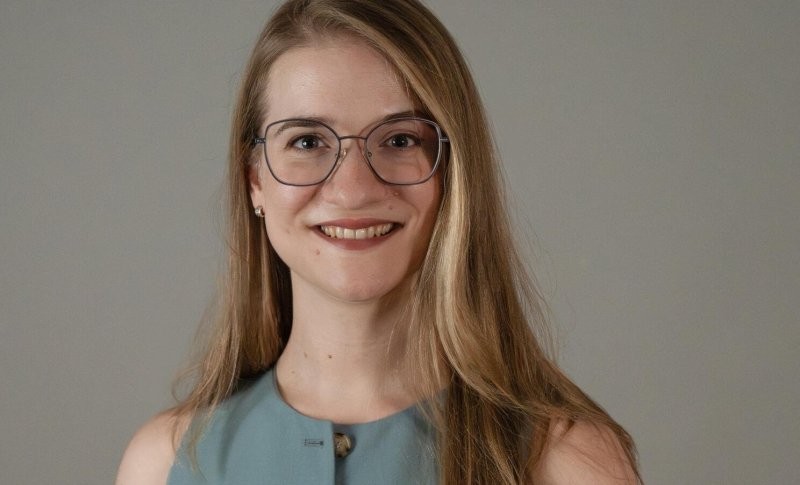


Claudia Schönichen
Post doc
Claudia Schönischen is a postdoctoral researcher in the Department of Biochemistry at Maastricht University. Claudia studied Technical and Molecular Medicine at Furtwangen University and obtained my MSc in Molecular Medicine from the University of Freiburg, Germany. During her studies, she gained working experience in academic and industry settings, including the University of Freiburg, Roche in Switzerland, and the University of North Carolina at Chapel Hill.
In 2025 Claudia completed her PhD within the Marie Skłodowska-Curie European Joint Doctorate TICARDIO at Maastricht University and the University Medical Center Mainz. Her doctoral research focused on platelets at the interface of vascular inflammation and coagulation, particularly on platelet interactions with endothelial and immune cells. During her PhD, she also served as an Early-Stage Researcher representative within the TICARDIO network.
Claudia is a member of the International Society on Thrombosis and Haemostasis (ISTH) and has presented her research at national and international conferences, receiving early-career presentation and travel awards. Alongside her research, she is involved in teaching and student supervision, as well as scientific outreach and public engagement activities.
Claudia her current research focuses on understanding how platelets and their precursor cells, megakaryocytes, are altered in heart failure with preserved ejection fraction (HFpEF). HFpEF is a heterogeneous cardiovascular disease strongly associated with metabolic and inflammatory comorbidities, yet the mechanisms linking these systemic changes to vascular dysfunction remain incompletely understood.
In 2026, Claudia is awarded a Dekker postdoctoral grant from the Dutch Heart Foundation to investigate how the metabolic and inflammatory environment in HFpEF affects megakaryocyte and platelet biology. Her project combines detailed platelet phenotyping in patients with the study of megakaryocytes and mechanistic experiments using cell and vascular models. By integrating patient-derived samples with molecular, cellular and functional approaches, she aims to understand how altered platelet production and function may contribute to cardiovascular pathology in HFpEF.
Claudia her long-term research goal is to understand how systemic disease environments reshape megakaryocyte and platelet biology and how these changes contribute to cardiovascular disease. Ultimately, she aims to translate mechanistic insights into biomarkers and novel therapeutic strategies that enable more targeted and personalized treatment.