
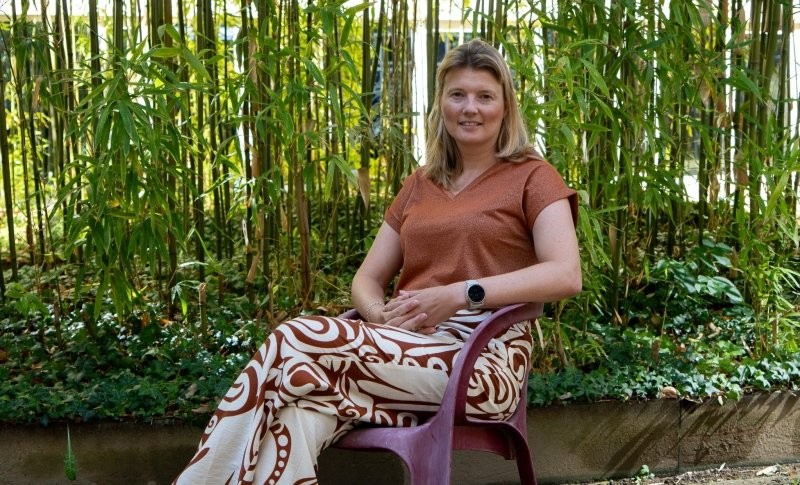
Bastiaan de Galan

Professor

Bastiaan de Galan studied medicine at the University of Amsterdam, graduating in 1994. He subsequently worked as a resident in the Department of Internal Medicine at Diakonessenhuis in Utrecht before beginning his specialist training in internal medicine at Radboud University Medical Center (Radboud UMC) in Nijmegen. He obtained his specialist degree in internal medicine and, in 2003, completed his PhD on impaired awareness of hypoglycaemia in people with type 1 diabetes. Following his training, he joined the medical staff of the Department of Internal Medicine at Radboud UMC, where he continued his translational research in diabetes, with a particular focus on hypoglycaemia and clinical care. In 2018, he coordinated Hypo-RESOLVE, a large European consortium aimed at improving the understanding of hypoglycaemia in people with diabetes through a multidisciplinary approach encompassing clinical, psychological and health-economic research. In 2019, Bastiaan was appointed Professor of Medicine, Clinical Diabetology, at Maastricht University and joined the Department of Internal Medicine/Endocrinology at Maastricht UMC+, while continuing to work part-time at Radboud UMC. He is actively involved in the training and supervision of medical students, residents and PhD candidates, as well as in diabetes education at national and international levels. He also contributes to the development of national guidelines for diabetes management.

His current research builds on his longstanding interest in improving the lives of people with diabetes by reducing the risk and impact of hypoglycaemia. A major focus is on understanding the consequences of hypoglycaemia, including the role of the stress hormone adrenaline in inflammatory responses to hypoglycaemia and its potential contribution to cardiovascular disease risk. Another area of his research, supported by the European Commission, investigates the potential benefits of an artificial intelligence (AI)-driven mobile application that provides insulin dose recommendations for people with type 1 or type 2 diabetes receiving intensive insulin treatment with insulin pens. The application runs on conventional smartphones and combines carbohydrate estimation from food photographs with an insulin-dosing algorithm to provide personalised insulin dose recommendations. It is currently being evaluated in a multicentre randomised controlled trial involving study centres in the Netherlands, Denmark and Greece. As part of this project, Bastiaan also investigates the role of health literacy and numeracy, which are becoming increasingly important as technological innovations become more integrated into clinical diabetes management.

Department of Internal Medicine/Endocrinology
P. Debeyelaan 25, 6229 HX
Room number: 5.A2-037
Telephone: +31433877011

  • 2026
    • Yu, E. Y. W., Ren, H. Y., Liang, X., Xi, Y., Shuai, M., Miao, Z., Xu, F., Zhang, K., Shen, L., Xia, H., Schram, M. T., van Greevenbroek, M., de Galan, B. E., van der Kallen, C. J. H., Linden, D. E. J., Blokland, G. A. M., Arts, I. C. W., Berendschot, T. T. J. M., Yan, Y., ... Zheng, J. S. (2026). Trans-ethnic estimation and implications of genetic impact on continuous glycemic profiles. Cell Discovery, 12(1), Article 40. https://doi.org/10.1038/s41421-026-00897-2
    • Koutroukas, V., Tziannou, A., Thomas, J. J. C., Martine-Edith, G., Heller, S., Mader, J. K., Brosen, J. M. B., Pedersen-Bjergaard, U., De Galan, B. E., Renard, E., Evans, M. L., McCrimmon, R. J., Speight, J., Pouwer, F., Amiel, S. A., & Choudhary, P. (2026). Factors Associated With Progression From Level 1 to Level 2 Sensor-Detected Hypoglycaemia in People With Type 1 and Insulin-Treated Type 2 Diabetes: A Post Hoc Analysis From the Hypo-METRICS Study. Diabetes Obesity & Metabolism, 28(10), 9584-9594. https://doi.org/10.1111/dom.71172
    • McCarthy, A., Soholm, U., Zaremba, N., Pouwer, F., Vaag, A. A., Heller, S., Mader, J. K., Pedersen-Bjergaard, U., de Galan, B. E., Renard, E., Evans, M. L., McCrimmon, R. J., Amiel, S. A., Choudhary, P., Divilly, P., & Hypo-RESOLVE Consortium (2026). Hypoglycaemia Was Not Associated With Depression, Anxiety, Diabetes Distress or Fear of Hypoglycaemia Scores in People With Type 1 or Insulin-Treated Type 2 Diabetes in the Hypo-METRICS Study. Diabetes Obesity & Metabolism, 28(10), 9685-9690. https://doi.org/10.1111/dom.71041
    • Brosen, J. M. B., Malmsio, D., Divilly, P., Martine-Edith, G., Zaremba, N., Ali, N., McCrimmon, R. J., Heller, S., Evans, M., de Galan, B., Mader, J. K., Renard, E., Vaag, A. A., Choudhary, P., & Pedersen-Bjergaard, U. (2026). Person-Reported and Continuous Glucose Monitoring (CGM) Recorded Hypoglycaemia in People With Insulin-Treated Type 2 Diabetes and Mild to Moderate Chronic Kidney Disease; Post Hoc Analysis From the Hypo-METRICS Study. Diabetes Obesity & Metabolism. Advance online publication. https://doi.org/10.1111/dom.71247
    • Cigler, M., El-Hakouni, O., Mecani, R., Pouwer, F., Abbink, E. J., Moser, M., de Galan, B. E., Renard, E., Evans, M., Brosen, J. M. B., Pedersen-Bjergaard, U., McCrimmon, R. J., Heller, S., Baumann, P. M., Soholm, U., Basta, S., Divilly, P., Zaremba, N., Amiel, S. A., ... Hypo-RESOLVE Consortium (2026). Exploring the gap between sensor-detected (SDH) and person-reported hypoglycaemia (PRH): The voice of people living with diabetes. Diabetic Medicine, 43(8), Article e70301. https://doi.org/10.1111/dme.70301
    • Sezer, B., Albers, J., Meisters, R., Schram, M. T., de Galan, B. E., van der Kallen, C., van Greevenbroek, M., Dagnelie, P., Koster, A., & Bosma, H. (2026). Exploring the role of class stigma in socioeconomic inequalities in type 2 diabetes: The Maastricht Study. Journal of Health Psychology, 31(9), 3578-3588. https://doi.org/10.1177/13591053251395856
    • Koutroukas, V., Thomas, J., Martine-Edith, G., Tziannou, A., Divilly, P., Soholm, U., Meek, C. L., Heller, S., Mader, J. K., Pedersen-Bjergaard, U., de Galan, B. E., Renard, E., Evans, M. L., McCrimmon, R. J., Speight, J., Pouwer, F., Amiel, S. A., Choudhary, P., & Hypo-RESOLVE Consortium (2026). Gold and Clarke Questionnaires Identify Different People With Insulin-Treated Diabetes and Impaired Awareness of Hypoglycaemia in Almost 60% of Cases: A Post Hoc Analysis From the Hypo-METRICS Study. Diabetes Obesity & Metabolism, 28(8), 6755-6766. https://doi.org/10.1111/dom.70869
    • den Brok, E. J., Svensson, C. H., Olsen, M. T., Dimitropoulou, N. M., van Kuijk, S. M. J., Panagiotou, M., Abdur Rahman, L., Proennecke, S., Mertens, P. R., Athanasopoulos, S., Dingena, C. F., Makrilakis, K., Mougiakakou, S., Pedersen-Bjergaard, U., & de Galan, B. E. (2026). Randomised Controlled Multicentre Trial to Investigate the Effectiveness of a Mobile Artificial Intelligence Solution for Diabetes Adapted Care: The MELISSA Trial Protocol. Diabetes Obesity & Metabolism, 28(8), 6576-6583. https://doi.org/10.1111/dom.70879
    • Mustafajev, I. F., Hendriksz, M. S., Stienstra, R., Tack, C. J., De Galan, B. E., & Meijer, R. I. (2026). Adrenaline is a prominent driver of inflammatory responses following hypoglycaemia. Diabetologia, 69(6), 1675-1685. https://doi.org/10.1007/s00125-026-06667-9
    • Okoro, C., Zhou, T. L., van der Kallen, C. J. H., Koster, A., Sutedja, N. A., Berendschot, T. T. J. M., de Galan, B. E., Eussen, S. J. P. M., Schram, M. T., & Kroon, A. A. (2026). Association of type 2 diabetes according to the number of cardiovascular risk factors within the recommended range with neuropathy - The Maastricht Study. Diabetes Research and Clinical Practice, 235, Article 113212. https://doi.org/10.1016/j.diabres.2026.113212